
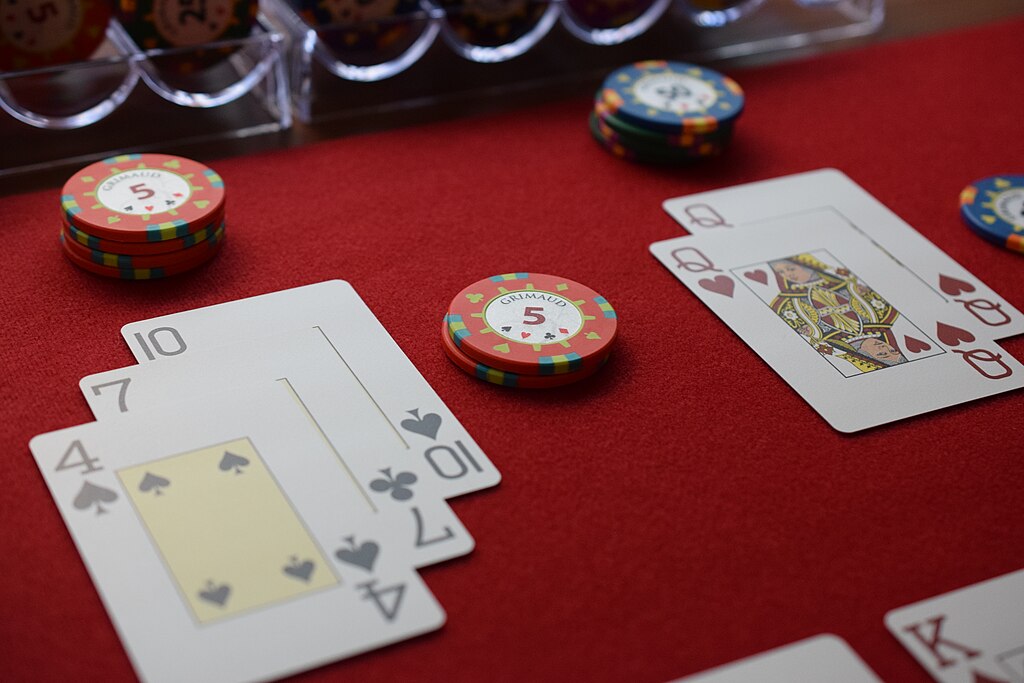
Introduction to Blackjack
Blackjack is one of the most strategic and widely played card games in casinos. Its appeal lies in the balance between chance and decision-making. Players aim to beat the dealer by getting a hand value as close to 21 as possible—without going over. The game’s simplicity, mixed with its skill-driven strategies, makes it a favorite among beginners and professionals alike.
Understanding the Basic Rules
Objective of the Game
The core goal in Blackjack is simple:
Beat the dealer’s hand without exceeding 21.
Card Values
- Number cards (2–10): Face value
- Face cards (J, Q, K): Count as 10
- Ace: Counts as 1 or 11, whichever benefits your hand
How a Round Works
- Every player places their bet.
- The dealer distributes two cards to each player and two to themselves.
- Players take turns choosing their actions:
- Hit – take another card
- Stand – keep the current total
- Double Down – double the bet and receive one final card
- Split – separate identical-value cards into two hands
- After all players act, the dealer reveals their hidden card and draws until reaching at least 17.
- Final hands are compared to determine winners.
Key Blackjack Strategies
Basic Strategy
Basic Strategy is a mathematically calculated chart that outlines the best statistical moves based on your cards and the dealer’s visible card. Following it reduces the house edge to less than 1%.
Elements of Basic Strategy
- Always stand on hard 17 or higher.
- Hit on 12–16 only when the dealer shows 7 or higher.
- Always split Aces and 8s.
- Never split 10s.
- Double down on 11 against any dealer card except Ace.
Bankroll Management
Smart bankroll handling helps players stay in control:
- Set a strict budget limit.
- Avoid chasing losses.
- Use consistent bet sizes rather than emotional decisions.
Betting Systems: Are They Worth It?
Many players attempt strategies like the Martingale or Fibonacci systems. While they can add excitement, they do not change long-term odds. Skillful decision-making matters more than betting patterns.
Common Mistakes to Avoid
- Ignoring the dealer’s upcard, which guides strategic decisions
- Overusing insurance, a side bet statistically unfavorable for players
- Playing emotionally, leading to poor choices
- Mismanaging bets, causing unnecessary losses
Tips for Improving Your Odds
- Practice using free online Blackjack tools.
- Master the Basic Strategy chart before playing real-money games.
- Choose tables with favorable rules (e.g., dealer stands on soft 17, 3:2 Blackjack payouts).
- Pay attention to card flow without relying on “intuition” alone.
FAQs
What is a “natural” Blackjack?
A natural Blackjack occurs when the first two cards total 21—typically an Ace plus a 10-value card.
Is card counting illegal?
Card counting isn’t illegal, but casinos discourage it and may remove players who attempt it.
What does a soft hand mean?
A soft hand includes an Ace counted as 11, giving more flexibility since the Ace can switch to 1 if needed.
Should beginners use betting systems?
Beginners should focus on strategy and fundamentals rather than complex betting systems.
What makes a Blackjack table favorable?
Rules like 3:2 payouts, dealer standing on soft 17, and fewer decks benefit the player.
Can Blackjack be profitable long-term?
It can be with skilled play and discipline, but casinos still maintain a statistical edge.
How is online Blackjack different from in-person play?
Online versions often feature faster gameplay, digital shuffling, and sometimes live dealers, but the core rules remain the same.
If you’d like, I can also create additional images, strategy charts, or a downloadable PDF version of this guide.
